
Bible Verses for Anxiety: What God Is Actually Saying When He Says "Do Not Fear"
"Do not fear, for I am with you; do not be afraid, for I am your God. I will strengthen you; I will help you; I will hold on to you with my righteous right hand." — Isaiah 41:10 CSB
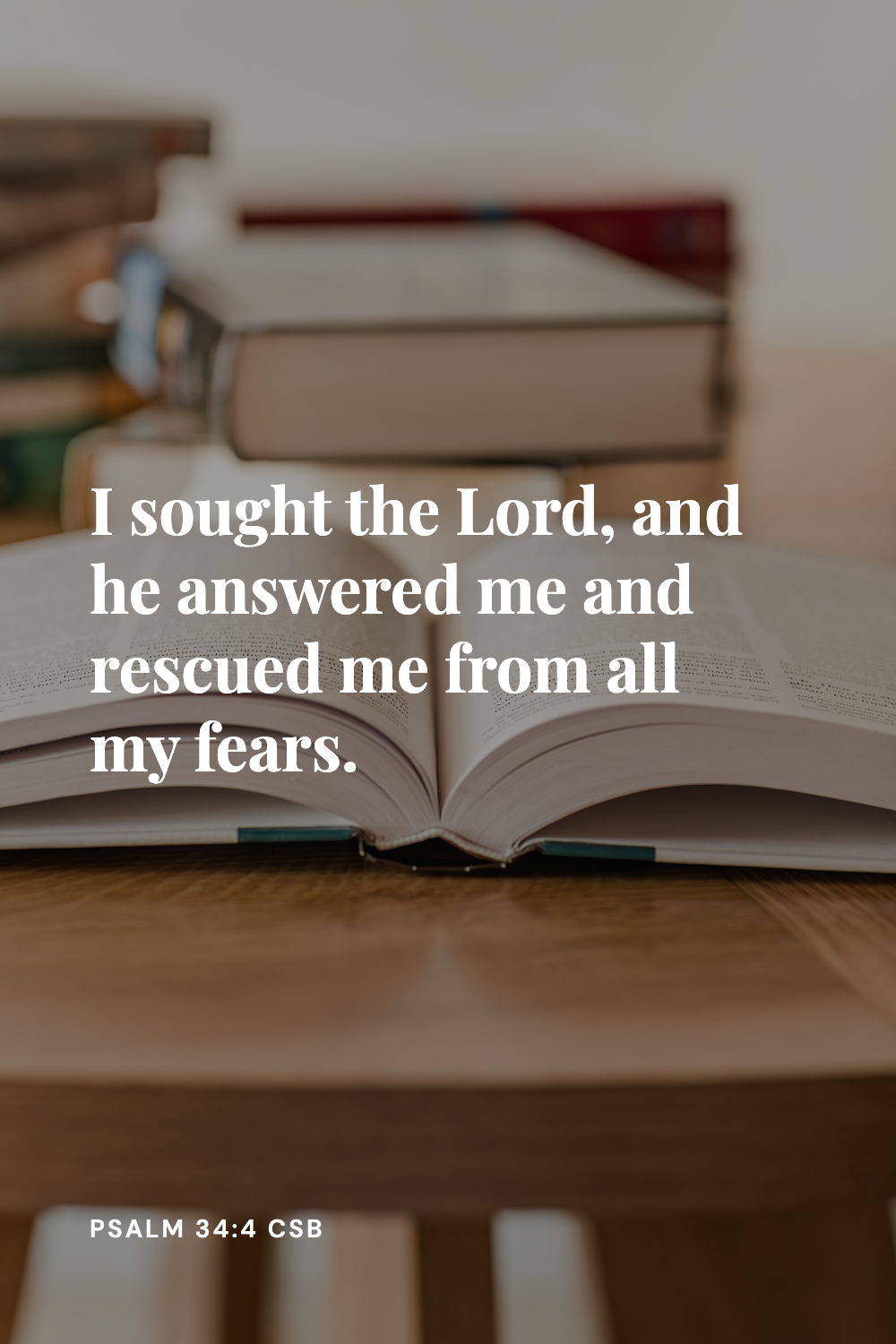
"I sought the Lord, and he answered me and rescued me from all my fears." — Psalm 34:4 CSB
"Do not fear" and "do not be afraid" appear more often in Scripture than almost any other phrase. That repetition is not accidental. If anxiety were simply a sign of insufficient faith, God would not need to address it this persistently across so many centuries and to many different people. He addresses it repeatedly because it is a fundamental human condition, shared by prophets, kings, disciples, and apostles who were by any measure people of genuine belief. These verses are not written to the faithless. They are written to the faithful who are afraid.
What "Do Not Fear" Actually Means
Before going to the specific verses, it is worth pausing on what God is commanding when He says "do not fear," because it is easy to hear it as a condemnation of the feeling rather than a direction toward a different foundation. If God were simply telling us to feel differently, the command would come across as both unkind and unhelpful. While we can lead our feelings, it’s not the same as choosing our actions. What God is commanding is a direction of our heart, not an emotion. He is not saying ‘stop feeling afraid.’ He is promising that He is the source of what we need in order to turn away from fear. He is saying ‘turn toward me rather than away from me when fear arrives.’
This matters enormously for us in the middle of real anxiety. Your fear does not put you outside the category of believers. It puts you inside the category of human beings who need to hear, again and again, that God is present and that His presence changes how we respond to situations that might make us anxious.
The ideal for us as believers and the thing the Holy Spirit is leading our hearts to is a condition of our hearts where we will genuinely not fear. But it is a misunderstanding of God’s commands to try to white knuckle ourselves into fearlessness. That can’t be done, and it’s not what God is asking. God gives us not just the command not to fear, but the tools to overcome our anxiety.
Key Bible Verses for Anxiety and Fear
Isaiah 41:10 records some of the Old Testament’s most common words about overcoming fear. "Do not fear, for I am with you; do not be afraid, for I am your God. I will strengthen you; I will help you; I will hold on to you with my righteous right hand." Every line in this verse is grounded not in a call to feel different but in a series of statements about Who God is and what He will do. The reason to not fear is not that the situation is easy. It is that God is present in the situation, and He is our source of strength.
Philippians 4:6-7 gives one of the most specific actions in the New Testament: "Do not be anxious about anything, but in every situation, by prayer and petition, with thanksgiving, present your requests to God. And the peace of God, which surpasses all understanding, will guard your hearts and your minds in Christ Jesus." (CSB) Paul’s primary point is not to stop being anxious, but how to stop being anxious. He tells you what to do with your stress and anxiety: bring it to God, specifically and with thanksgiving, and receive in return a peace that operates above the level where reasoning can fully account for it. The peace that surpasses understanding is not a vague feeling, although it does change your feelings; it works at the level of the nervous system itself, and that is not a small thing.
Psalm 34:4 is a testimony rather than a command, and that makes it distinctly useful: "I sought the Lord, and he answered me and rescued me from all my fears." The Psalmist is reporting an experience. He brought his fear to God and God responded. That testimony can become yours. It also makes a promise: seeking God leads to rescue.
2 Timothy 1:7 addresses the source of fear directly: "For God has not given us a spirit of fear, but of power, love and sound judgment." (CSB) The anxiety that loops and amplifies is not from the Spirit who lives in you. The Spirit produces power, love, and the capacity to think clearly. This does not deny that the feelings are real. It clarifies their origin, which helps us understand that fear can’t be trusted. When fear is trying to tell you something about your situation, remember to listen to what the Holy Spirit says instead.
Psalm 46:1 provides an anchor for our lives: "God is our refuge and strength, a helper who is always found in times of trouble." Not sometimes found. Not found when we have earned it through consistent devotion. Always found. The availability of God in the moment of anxiety is not contingent on the quality of your recent spiritual life. He’s always there, including in times of trouble. That’s a promise you can hold onto.
What Jesus Specifically Taught About Worry
Jesus addresses anxiety in Matthew 6:25-34 extensively, and the context is key. He is speaking to people with real, material concerns — food, clothing, survival. He does not dismiss those concerns as trivial. He asks a different question: is worry adding anything to your capacity to address them? "Can any of you add one moment to his life span by worrying?" (Matthew 6:27 CSB)
Jesus then turns to the birds and the flowers, not as illustrations of naivety, but as a reminder that the Father who provides without being asked. The point Jesus is making is not that your concerns are small. It is that the Father Who feeds the birds knows you are worth more than birds, and He sees precisely what you need. The antidote Jesus offers to worry is not self-discipline or a change in mental habits. It is a deepening knowledge of the character of the Father, because a person who genuinely knows that God sees them and cares for them has a different relationship to uncertainty than a person who does not. God meets us in the middle of ordinary life, including the most ordinary and persistent of anxieties.
How to Use These Verses When You Are Anxious
These verses are not incantations to recite at the right moment. They are invitations to encounter the God who has addressed your fear throughout history and Who is addressing it now. The consistent instruction across all of Scripture is some form of the same action: remember Who God is, and bring your fear to Him rather than carrying it alone. "Cast all your anxiety on Him because He cares for you," Peter says (1 Peter 5:7 CSB). The word "cast" describes something deliberate, a transfer of weight from your hands to His.
Bringing your actual fear to God in honest prayer is not the same as performing devotion or saying the right words. It is the act of naming what you are carrying and presenting it to the One Who is genuinely present, genuinely capable, and genuinely willing to receive it. The peace that follows is not always immediate. It does not always resolve the circumstances that produced the fear. It does change the foundation of the situation—you are no longer carrying it alone, and the One now carrying it with you has never once been overwhelmed by anything.
If anxiety is significantly affecting your daily life, speaking with a doctor or counselor is a valuable step alongside these practices. God works through the people He has given wisdom to help with exactly this, and Scripture and professional care are not in competition with each other. The same God who promises to make you stand when your faith feels too weak has also given you people and resources to lean on when you need them.
Bring your fear to God. Bring it specifically, honestly, and more than once. These verses are not a one-time remedy—they are the vocabulary of an ongoing relationship with the God Who said "do not fear" not because the fear is unjustified, but because He is present, and His presence is more than sufficient for everything you are facing.