Give Us This Day Our Daily Bread: The Meaning of the Fourth Petition
Give us this day our daily bread means asking God to meet our needs today. The fourth petition of the Lord's Prayer teaches trust, gratitude, and care for one another. Jesus gives us a shared prayer: give us what we need.
"Give us today our daily bread." (Matthew 6:11 CSB)
This short sentence carries a whole way of living. We ask for ordinary food and for today's needs. We trust the Father while remembering that the prayer includes our neighbors.
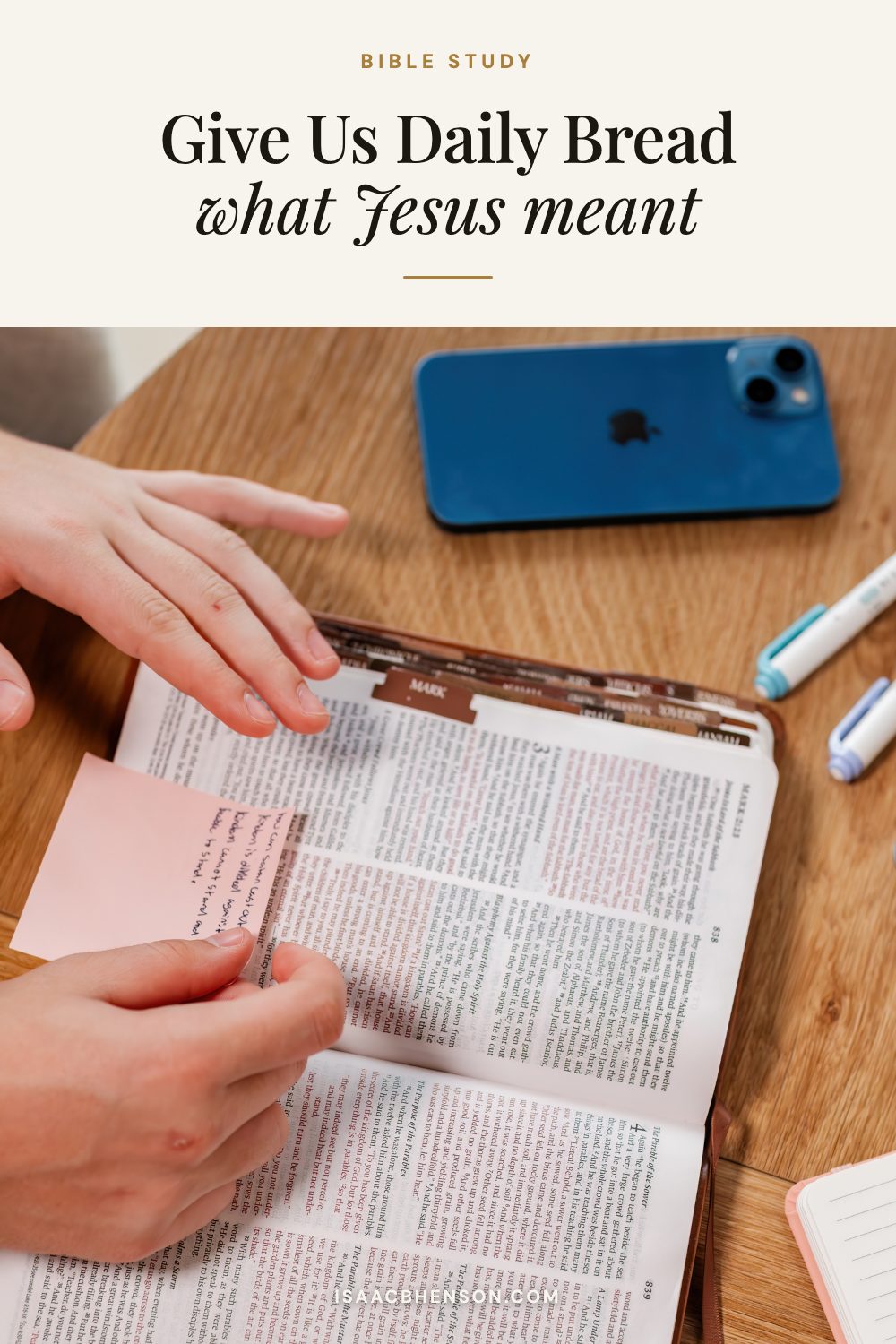
Bread for Us
Jesus tells us to ask for bread, a basic daily need. The request makes room for food, shelter, work, health, and the help needed for life today.
That is humbling, and it is meant to be.
The prayer keeps our asking honest. We bring real needs to a Father who knows us. Because Jesus says our bread, the prayer also turns our attention toward people who do not have enough. We cannot pray for shared bread while ignoring a hungry neighbor we can help.
This connects to the whole posture of the prayer, which begins by calling God Father and holy. You only ask for daily bread from someone you trust to give it.
The Manna Pattern
There is a story underneath this petition, and Jesus' first hearers would have known it. When Israel was in the wilderness, God fed them with manna, bread that appeared each morning.
God told the people to gather what they needed for each day. When some kept ordinary leftovers overnight, the food spoiled. Before the Sabbath, God gave a double amount that remained good so the people could rest. The full story joins daily trust with Sabbath rest.
God used the manna to teach daily dependence and obedience. Each household gathered what it needed, and Exodus 16:18 says no one had too much or too little.
Daily bread is the manna pattern. Enough for today, and a fresh trust tomorrow.
Why We Resist Praying It Honestly
Let me name the hard thing. Most of us do not want daily bread. We want a guaranteed pantry. We want enough margin that we never have to depend on anyone, including God.
That instinct is understandable, and it is also the very thing this petition gently confronts.
Jesus addresses worry a few verses later. "Don't worry about tomorrow, because tomorrow will worry about itself. Each day has enough trouble of its own." (Matthew 6:34 CSB) Wise planning still has a place. Jesus teaches us to seek God's kingdom and trust the Father instead of letting tomorrow's fear rule today. When worry rises, we can ask God for help and take the next wise step.
Praying for daily bread helps us place tomorrow in God's hands.
Jesus, the Bread of Life
There is a deeper layer here too. Jesus, who taught us to pray for daily bread, later called Himself the bread of life. "I am the bread of life... No one who comes to me will ever be hungry." (John 6:35 CSB)
Matthew 6:11 first asks for real daily provision. John 6 adds another picture of bread. Jesus gives life that food alone cannot provide.
We depend on God for body and soul. We should not turn a hungry person's need for food into a metaphor. We can offer bread, practical help, prayer, and the hope of Christ.
Living One Day at a Time
This prayer frees us from trying to control the whole future. We can trust God today, plan with humility, and ask again tomorrow.
It also turns provision into gratitude. When you have prayed for daily bread and the meal is on the table, you see it as a gift instead of an entitlement. The ordinary becomes holy.
It also sends us toward other people. We can share a meal, support a food pantry, help with a bill, or notice who is going without. The same kingdom-first trust that lets us pray your kingdom come lets us ask for bread and become part of God's care for a neighbor.
Jesus teaches us to ask for today's bread from a Father who can be trusted. We receive with thanks, share what we can, and return tomorrow.
Frequently Asked Questions About Daily Bread
What does "give us this day our daily bread" mean?
It means asking God to meet our needs today. Because Jesus says give us, the petition also teaches us to care about the needs of other people.
What is the meaning of Matthew 6:11?
Matthew 6:11 is the fourth petition of the Lord's Prayer, where Jesus teaches us to ask God for our daily bread. It frames God as a Father we can trust to provide our ordinary needs one day at a time.
Why does the prayer say daily bread instead of asking for more?
Jesus teaches trust in the Father's daily care. The wording also keeps us grateful and aware of neighbors who need bread.
How does daily bread connect to the manna in Exodus?
In Exodus 16, God usually gave Israel manna for one day at a time. Before the Sabbath, He gave a double amount so the people could rest. The pattern taught daily trust, obedience, and Sabbath rest.
Is daily bread only about physical needs?
The direct request is for daily provision. John 6 also calls Jesus the bread of life, which shows our deeper need for the life He gives. Physical hunger still calls for practical care.
This post is part of a series on the Lord's Prayer. You can also read more on the blog about asking God for help.
Taking care of home, pastor, science teacher, Bible reader